12 October 2026
Why Professional Mold Testing and Removal Matters for Your Home
Presented by @themoldtestingremovalhouse
When you spot a patch of discoloration on your bathroom ceiling or catch a musty smell in the basement, your first instinct might be to grab a spray bottle and scrub it away. I have seen homeowners do exactly that, only to find the problem returning within weeks, often worse than before. Mold is not just a surface issue. It is a symptom of moisture, poor ventilation, or hidden water damage, and treating it without understanding the root cause can waste time and money. That is where professional mold testing and removal comes into play, and it is a process that demands more than a bucket of bleach.
The Limits of DIY Mold Cleanup
I once worked with a family in a split-level home who had tried cleaning black mold off their drywall with store-bought sprays for months. They thought they had it handled, but their allergies kept getting worse. When we finally tested the air in their home, the mold spore count was three times higher than the outdoor baseline. The problem was not just on the wall. It had colonized the insulation behind it. That is the thing about mold: what you see is rarely the full picture. Mold roots, called hyphae, can penetrate porous materials like wood, drywall, and carpet padding, making simple cleaning ineffective.
DIY removal often disturbs the colony without containing it, releasing a burst of spores into the air. This can spread contamination to other rooms, especially if you use a fan or vacuum without a HEPA filter. I have seen more than one case where a homeowner's attempt to "clean" mold ended up making the entire house worse. Professional mold testing and removal is designed to avoid that trap by first identifying the type and extent of the contamination, then isolating the area before any cleaning begins.
Why Testing Comes First
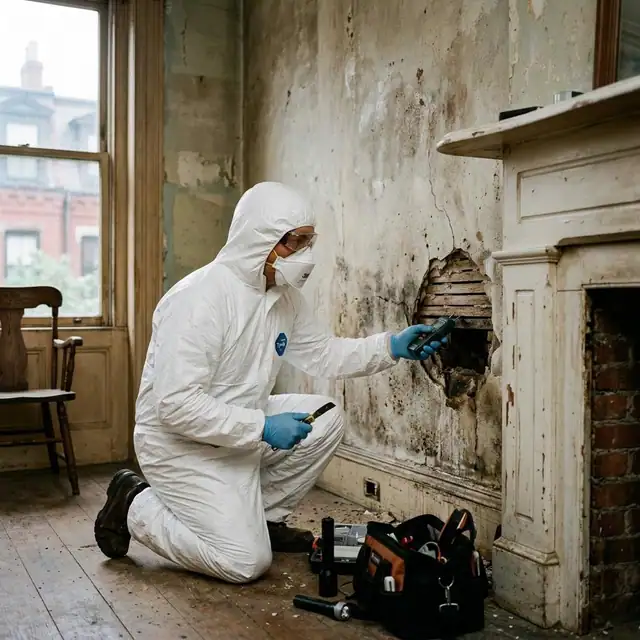
Before you can remove mold, you need to know what you are dealing with. Not all mold is toxic, but some species produce mycotoxins that can cause serious respiratory issues. Testing also tells you whether the contamination is surface level or structural. A good assessment starts with a visual inspection and the use of a Moisture Meter to find hidden damp spots behind walls and under floors. This tool can detect moisture levels that are invisible to the naked eye, often pointing to leaks in plumbing or the building envelope.
Air sampling is another key step. A certified IAQA professional can measure the concentration of airborne mold spores and compare it to outdoor levels. If indoor levels are higher, you have an active contamination source that needs to be addressed. Surface sampling can identify the specific species present, which matters for both health risk and treatment strategy. For example, black mold is often cited as a health concern, but it is actually the mycotoxins produced by some species, not the color itself, that cause the most harm. Knowing the difference guides the remediation plan.
Containment Is Non-Negotiable
Once testing is done, the removal phase begins with containment. This is where many DIY efforts fail. Professional abatement contractors set up a containment barrier using heavy plastic sheeting and tape to seal off the work area from the rest of the home. They also establish negative air pressure inside the containment zone using an air scrubber equipped with a HEPA filter. This setup ensures that any spores disturbed during the removal process are pulled out of the air and captured, rather than drifting into adjacent rooms.
I have walked through jobsites where the tarp-off was so tight you could not feel a draft from the sealed doorway. That level of detail matters because mold spores are microscopic and can travel on air currents. Without proper containment, you risk cross-contaminating the entire house. The air scrubber runs continuously during the job and often for several hours afterward to clear the air. This is not a corner you want to cut.
Removal Methods That Work
The actual removal depends on the surface and the extent of growth. For porous materials like drywall and insulation, removal and replacement is often the only safe option. You cannot truly clean mold out of drywall; it is better to cut it out and start fresh. For non-porous surfaces like concrete, metal, or glass, a combination of cleaning and antimicrobial treatment can be effective.
For more stubborn cases, especially when mold has penetrated wood, techniques like dry ice blasting or soda blasting come into play. Dry ice blasting uses frozen CO2 pellets that sublimate on contact, cleaning the surface without water and without leaving secondary waste. Soda blasting uses baking soda particles under pressure, which is gentler than sandblasting and can clean delicate surfaces like brick or stone. Both methods are dry, which means they do not add moisture to the situation, and they are effective at removing mold from deep grain wood.
After cleaning, an antimicrobial coating can be applied to treated surfaces to resist future growth. Products like Concrobium and Boracare are common choices. They do not just kill mold on contact; they leave a residue that discourages regrowth. For areas prone to moisture, like crawl spaces or laundry rooms, a dehumidifier is often recommended as a long-term prevention measure. Keeping indoor humidity below 60 percent, ideally between 30 and 50 percent, starves mold of the moisture it needs to thrive.
Encapsulation: A Practical Alternative
In some cases, full removal is not feasible or necessary. Encapsulation is a technique where a sealant is applied over mold-contaminated surfaces to lock in spores and prevent them from becoming airborne. This is sometimes used in attics or other unfinished spaces where the mold is not actively spreading and the environment can be kept dry. However, encapsulation is not a permanent fix if the moisture source remains. It buys time, but eventually the moisture problem must be addressed or the mold will break through the sealant. A professional can help you decide when encapsulation is appropriate and when it is just postponing a bigger problem.
The Role of Regulations and Standards
The EPA offers guidelines for mold remediation, but it is important to understand that these are recommendations, not enforceable laws in most residential settings. Still, following EPA protocols is considered best practice. Many professional abatement contractors also follow standards set by the IAQA, which provide a framework for safe and effective mold remediation. These standards cover everything from personal protective equipment to waste disposal.
I have seen jobs where a contractor skipped the containment step to save time, and the result was a secondary contamination in the HVAC system. That mistake can cost a homeowner thousands of dollars in additional cleanup. A qualified contractor will not take shortcuts, and they will document the process for your records. If you are hiring someone, ask whether they follow EPA guidelines and whether they have IAQA certification. These are signs of a serious professional.
When to Call a Professional
Not every spot of mold requires a full-scale remediation. A small patch on a tile surface in a well-ventilated bathroom can often be cleaned with a vinegar solution and a good scrub. But if the area is larger than about three square feet, if it is caused by sewage or flood water, or if anyone in the home has asthma or allergies, it is time to bring in a pro. The same goes if you suspect hidden mold behind walls or under flooring. That is where the combination of mold testing and removal becomes essential. A professional can identify the full extent of the problem, contain it, and remove it in a way that protects your family and your home.
I have been in homes where the mold was so well hidden that the homeowner had no idea it was there until we opened up a wall for an unrelated repair. The moisture meter picked up high readings in a corner that looked dry from the outside. After cutting into the drywall, we found a thick colony of black mold and wood rot behind it. The water damage had been coming from a slow pipe leak in the wall for years. Without testing, that would have continued to worsen, and the family would have kept breathing those spores every day.
Prevention After Remediation
Once the mold is gone, the goal is to keep it from coming back. That means fixing the moisture problem at its source. Whether it is a leaking pipe, a cracked foundation, or poor attic ventilation, the solution must address the root cause. A dehumidifier can help in the short term, but it is not a substitute for proper drainage and air circulation. In basements, a sump pump and vapor barrier can make a big difference. In bathrooms, an exhaust fan that vents to the outside is critical.
Regular monitoring is also wise. A quick visual check of known problem areas after heavy rain or seasonal changes can catch new growth early. Some homeowners invest in a simple moisture meter to check walls and floors annually. If you catch moisture before mold takes hold, you save yourself the cost and hassle of another remediation. And if you ever suspect mold is back, do not hesitate to start the process over with proper mold testing and removal. It is far cheaper than dealing with structural damage or health issues down the line.
Mold is not something to ignore or treat lightly. It is a sign that your home's environment is out of balance. By taking a methodical approach, starting with accurate testing, proceeding with professional containment and removal, and following up with prevention, you can keep your home safe and healthy. That is the difference between a quick fix and a lasting solution.